




Controlling Husband: Key Signs and How to Deal With It

Reviewed By
Maggie Martinez, LCSW
 Review Board Member
|
By
Licensed Clinical Social Worker
Review Board MemberMaggie enthusiastically works with people to foster self-determination and encourages them to grow in a safe therapeutic environment. She has a background in psychology and... Read More
Rachael Pace, Author

Rachael Pace inspires with motivational articles on loving partnerships. She encourages making room for love and facing challenges together.
Learn about Our Editorial Process
23k Reads
Updated: 4 Dec, 2025
Heal & Grow Daily for a Happier Relationship
Subscribe FREETable of Contents
View more
Key Takeaways
It’s not always easy to recognize when a relationship begins to feel “off,” especially when the person you love seems caring on the surface… yet something feels heavier than it should.
Small comments turn into constant criticism; concern becomes monitoring; affection slowly shifts into control. When these patterns emerge, it can leave you confused, anxious, and unsure of what changed—or why.
If you’ve started questioning your partner’s behavior or wondering whether you’re dealing with a controlling husband, you’re not alone. Understanding the signs can bring clarity, comfort, and a sense of steadiness as you navigate what you’re experiencing.
What is a controlling husband?
A controlling husband exerts excessive power over his partner’s life, often under the guise of care or concern.
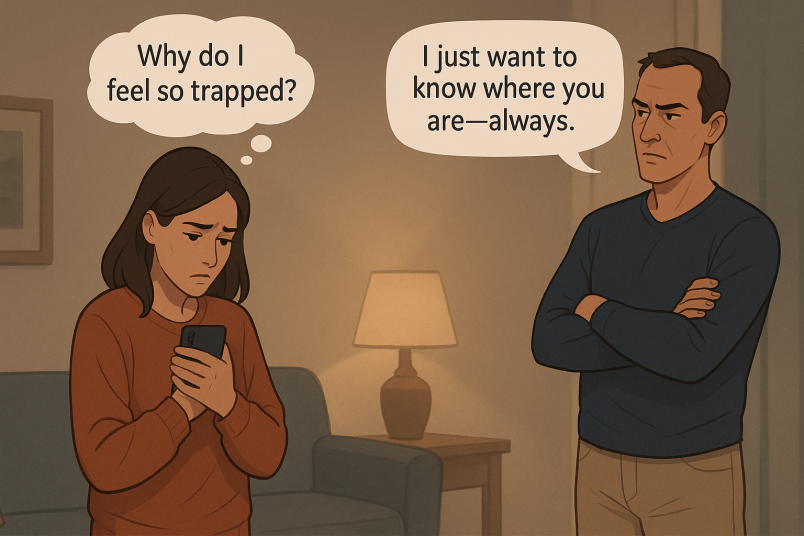
This control can manifest in various ways, such as dictating what you wear, who you can see, or constantly checking your phone and social media.
Example: He might insist on knowing your whereabouts at all times or criticize your choices to undermine your confidence. If you find yourself thinking, “Is my husband controlling?” these behaviors are red flags.
A controlling husband creates an environment of fear and dependence, making it difficult for you to feel autonomous and respected in your relationship.
17 signs of a controlling husband
You may be wondering if your partner is truly controlling or if you’re overthinking things. It’s important to recognize the signs of a controlling husband to understand your situation better. Here are some telltale signs that your husband may be controlling:
1. He nitpicks and finds problems in everything you do
Making you feel like you can never do anything right. This constant criticism can erode your confidence and self-worth over time.
- Example: He points out flaws in how you cook, clean, speak, or even sit, making it feel like nothing you do is ever “good enough.”
- Impact: You experience emotional distress—constantly walking on eggshells, feeling anxious and drained as if you’re carrying a heavy emotional burden every day.
RELATED READING : 7 Signs of Nitpicking in a Relationship and Ways to Stop It
2. He manipulates you to get what he wants
Often using subtle tactics that make you question your own decisions. This manipulation can make you feel powerless and confused about your own desires.
- Example: He twists your words or uses emotional pressure so you end up agreeing with him, even when you don’t want to.
- Impact: You face self-doubt—regular criticism makes you second-guess your choices and abilities, eroding your self-confidence.
3. He criticizes your every move
Dictating how you eat, dress, and act. This relentless criticism makes you feel like you have to change who you are to please him, losing your sense of identity in the process.
- Example: He comments on how you dress, eat, or speak, pushing you to change your behavior just to avoid his comments.
- Impact: You experience a loss of identity—feeling disconnected from who you are, as if you’re slowly losing your own voice.
4. He makes you feel guilty for not indulging his every whim
Using guilt as a tool to control your actions and decisions. This guilt-tripping can make you feel responsible for his happiness at the expense of your own.
- Example: If you say no to something, he accuses you of being selfish or uncaring.
- Impact: You feel fear and anxiety—constantly worried about upsetting him and afraid to express your real feelings.
RELATED READING : 13 Signs of Guilt Tripping in Relationships & How to Cope
5. He gaslights you, making you question your thoughts and actions
By distorting the truth and denying your reality, he makes you doubt your own sanity and judgment.
- Example: He denies things he clearly said or did, making you doubt your memory and perception.
- Impact: You develop feelings like you’re not capable of trusting your own judgment.
RELATED READING : 15 Signs of Gaslighting in Relationships and How to Deal With It
6. He makes you feel bad about having a life outside your marriage
Discouraging you from pursuing your interests or spending time with others. This isolation can leave you feeling lonely and dependent on him for companionship.
- Example: He gets upset when you spend time with friends, making you feel guilty for wanting space.
- Impact: You experience isolation—feeling lonely, disconnected, and cut off from your support system.
7. He tries to isolate you from friends and family
Wanting you all to himself. This jealousy can sever your support network, making it harder for you to seek help or perspective from others.
- Example: He discourages visits, criticizes your loved ones, or creates tension to keep you away from them.
- Impact: You feel increasing isolation—loneliness grows as your closest connections are pushed away.
8. He excessively monitors your finances

Stripping you of financial independence. By controlling the money, he ensures you are economically dependent on him, limiting your freedom and options.
- Example: He restricts your spending, questions every purchase, or keeps bank information hidden.
- Impact: You experience financial dependence—feeling trapped and powerless without access to your own money.
RELATED READING : 15 Tips for Women to Be Financially Independent After Marriage
9. He uses demands and threats to get his way
Resorting to emotional blackmail. This coercion can make you feel trapped and afraid to assert your own needs or boundaries.
- Example: He threatens to withdraw affection, punish you emotionally, or “make things difficult” if you don’t comply.
- Impact: You feel heightened fear and anxiety—constantly on edge, worried about triggering his anger.
10. He dismisses your opinions and excludes you from major decisions
Showing a lack of respect for your perspective. This exclusion can make you feel insignificant and voiceless in your own life.
- Example: He makes big financial or family decisions without consulting you, treating your input as unimportant.
- Impact: You suffer emotional distress—feeling unheard, insignificant, and emotionally drained.
11. He only shows love when you comply with his demands
Offering affection with strings attached. This conditional love makes you feel like you have to earn his approval and affection, which is both exhausting and demeaning.
- Example: He becomes affectionate only when you follow his instructions, making love feel conditional.
- Impact: You fall into a feeling like you must earn love, which chips away at your self-worth.
12. He refuses to listen to your perspective
Dismissing your feelings and thoughts without consideration. This dismissiveness can make you feel unheard and unimportant in the relationship.
- Example: He interrupts, dismisses, or mocks your feelings whenever you try to express them.
- Impact: Trust erodes—you feel constantly judged, watched, and unable to speak freely.
13. He slowly erodes your self-esteem, making you feel dependent on him
By undermining your confidence, he ensures you believe you cannot manage without him, fostering a sense of helplessness.
A research paper published in European Psychologist states that people with high self-esteem tend to have more satisfying romantic relationships — and their satisfaction often improves too.
- Example: He makes subtle remarks suggesting you’re incapable of managing life on your own.
- Impact: You experience deep self-doubt—believing you’re not good enough or unable to function without him.
14. He is suspicious of you and doesn’t trust you
Often accusing you of dishonesty or infidelity without cause.
A research paper published in 2025 states that when trust in romantic relationships breaks down — often due to betrayal, poor communication, or past trauma — it harms emotional safety, intimacy, and overall relationship satisfaction.
This constant suspicion can create a tense and paranoid atmosphere in your relationship.
- Example: He accuses you of lying or cheating without evidence and constantly questions your motives.
- Impact: Trust breaks down—you feel monitored, scrutinized, and unable to communicate openly.
15. He tracks your whereabouts, messages, and phone calls without your consent
Invading your privacy. This monitoring makes you feel constantly watched and controlled, stripping you of your personal freedom.
- Example: He checks your phone regularly or insists on knowing where you are every minute.
- Impact: You experience fear and anxiety—feeling watched, controlled, and afraid to make independent decisions.
16. He uses belittling language and engages in name-calling
aiming to hurt and demean you. These verbal attacks can inflict deep emotional wounds, making you feel worthless and unlovable.
- Example: He mocks you, calls you hurtful names, or uses degrading language to belittle you.
- Impact: You face emotional distress—constant negativity leaves you sad, anxious, and emotionally overwhelmed.
17. He demands to know your every move and becomes jealous when you give attention to others
This overbearing control can make you feel suffocated and anxious, constantly trying to avoid his jealousy and possessiveness.
- Example: He gets upset if you talk to coworkers, friends, or even family, accusing you of neglecting him.
- Impact: You experience isolation—feeling cut off from meaningful relationships and increasingly alone
How to deal with a controlling husband: 15 ways
How to deal with a controlling husband without making the situation worse? Being married to a controlling husband can be very trying. The constant criticisms, spying, and gaslighting take a toll on your mental health.
1. Keep your cool
It’s hard not to argue. He tends to get on your nerves, and you don’t want to bow to his unreasonable wishes. You don’t have to.
Try to stay calm and patient when dealing with him. Instead of getting in his face, ask him gently if he has considered your perspective.
- Note: Dominant husbands are unlikely to respond well if you treat them the way they treat you. Be the bigger person here.
2. Figure out the causes behind his controlling behavior
It’s important to know what makes a person controlling in the first place.
Did your husband lose a loved one in an accident? How was his childhood? Was it traumatic? Were his parents controlling? Does he have an anxiety disorder that makes him want to control you?
- Note: Figuring out what’s causing him to behave this way is the stepping stone to dealing with a controlling husband. With love and empathy, you might be able to get him to stop being so controlling.
3. Openly communicate with him
Once you identify the problem, you can understand where he is coming from. Then try to talk to him about how his behavior is damaging your marriage.
He might totally blow you off and get angry. Most controllers aren’t even aware of their controlling nature. Telling him, ‘You’re dominating your wife, and you should stop right away,’ won’t work. You need to be respectful and gently remind him of the times he came off as controlling.
- Note: Tell him how you’d like him to behave instead. He won’t magically transform overnight, but talking openly is a good starting point.
RELATED READING : The Importance of Communication in Relationships
4. Take charge of your life
It’s easy to lose yourself when your husband constantly criticizes your every move. Take control of your own life. Do you want to quit your job and go back to school? Do it. Want to learn something new, but he wouldn’t allow you? Go for it, anyway.
- Note: Don’t let your passion die just because your husband controls your life.
5. Stay close to your friends and family
Go visit your mom or a close friend, even if it sends your husband into a frenzy. You shouldn’t let him isolate you from the people who have always been there for you. Surround yourself with positive people.
- Note: Explain why you need to see your girlfriends every once in a while. Make plans with them, and don’t let your husband stop you from showing up at your friend’s party.
6. Don’t hesitate to ask for help
Does he seem abusive to you? Abuse doesn’t necessarily have to be physical. It can be verbal, mental, and psychological as well. Make it clear to him that you won’t tolerate any kind of abuse. If he doesn’t listen and keeps getting violent, let your friends and family know about it.
- Note: Even if your over-controlling husband promises not to be abusive or violent again, keep an eye out and don’t let him walk all over you.
7. Set boundaries that stick
First, try to talk to him calmly and explain the things you won’t take anymore. Withholding affection or leaving frequently won’t change anything if he doesn’t want to correct his behavior.
- Note: If he ignores you, still set the boundaries and give him consequences to show how serious you are.
RELATED READING : Setting Healthy Boundaries in a Relationship
8. Stop giving him power over you
It might not be easy, but try to take control of your life and relationship. If you’re financially dependent on him, get a job. Don’t let him destroy your self-worth. Take care of your mental and physical health.
- Note: Whenever he tries to make you feel small, stand up for yourself. If he doesn’t recognize and correct his controlling nature, be brave enough to give him an ultimatum. Don’t be scared to follow through if push comes to shove.
9. Give couples therapy a try
What if your husband doesn’t bother correcting his controlling behavior even after your consistent efforts? It’s time to involve a professional. It doesn’t matter how he feels about therapy; try to make him understand how seeking professional help can improve your relationship.
- Note: Through couples therapy, both of you can feel heard and sort out the issues with the help of a licensed therapist.
10. Be brave enough to leave
There’s nothing wrong with going out of your way to stay with such a husband. It doesn’t make you look weak. Rather, it shows how strongly you uphold your vows.
However, some people simply can’t and won’t change. If, after trying your best to deal, he still can’t see any issues with his actions, walking away from this unhealthy marriage might be your only choice.
- Note:It doesn’t mean you failed your marriage. You’re just choosing your physical and mental well-being over an unhealthy relationship.
11. Try self-reflection
Self-reflection is like taking a moment to have a conversation with yourself in your mind. Think about your feelings and what’s happening in your relationship.
12. Seek legal consultation
Legal consultation is like seeking advice from a professional who knows the rules and laws. When you talk to a lawyer or attorney, they can explain what you can do to protect yourself and your rights if you’re facing serious problems in your relationship.
- Note: This step is crucial if you feel threatened or if your husband’s behavior escalates to abuse.
13. Achieve financial independence
Financial independence means being able to handle your own money and not depending on someone else, like your spouse, for everything. It’s about having control over your finances so you can make choices that are best for you.
- Note: Start by saving money, finding a job, or improving your skills to secure a stable income. This independence can give you the confidence to make decisions that are best for you.
RELATED READING : 5 Tips for Financial Independence in Marriage Without Harming It
14. Educate yourself
Knowledge is power. Educate yourself about the characteristics of a controlling husband and the dynamics of controlling relationships.
Understanding the patterns and behaviors can help you recognize what’s happening and empower you to take action.
- Note: Read books, attend workshops, and join support groups to learn more and connect with others who understand your situation.
Watch this TED Talk by Dr. Janie Lacy, a psychotherapist, who shares how to break patterns of unhealthy relationships and build healthier emotional connections.

15. Prioritize your mental health
Your mental health is paramount. Engage in activities that nurture your mind and soul. Practice mindfulness, meditation, or yoga to reduce stress. Seek therapy for yourself to process your emotions and build resilience.
- Note: Taking care of your mental health will give you the strength to deal with your controlling husband and make decisions that are right for you.
Please note:
Even after addressing the problem, if nothing changes, remember this: you have the right to choose peace. You don’t have to stay and suffer in silence. You can walk away, reclaim your life, and create a future where you feel safe, valued, and free. You deserve that.
RELATED READING : How to Get Out of a Controlling Relationship
Choosing yourself
Navigating life with a controlling husband can leave you emotionally drained, uncertain, and disconnected from yourself. But recognizing the signs is the first step toward reclaiming your strength and peace.
Whether you choose to set firm boundaries, seek support, or walk away entirely, remember that your well-being comes first. You deserve safety, respect, and a life where your voice matters. Healing begins the moment you decide you’re worthy of more—because you truly are.
Helpful?
Continue exploring this topic

Marriage.com AI: Your Relationship Guide
Talk through what's on your mind.
Automated
YOU COULD START WITH
Share this article on
Rachael Pace
Author
Rachael Pace is a noted relationship writer associated with Marriage.com. She provides inspiration, support, and empowerment in the form of motivational articles and essays. Rachael enjoys studying the evolution of loving partnerships... Read more and is passionate about writing on them. She believes that everyone should make room for love in their lives and encourages couples to work on overcoming their challenges together. Read less

Marriage.com Community
Real people. Real relationships. No judgment.
How do you tell if something is emotional abuse and not just “normal relationship conflict”?
Have you navigated this in your own relationship?
Your perspective could help thousands of couples.
See what people are saying
Your perspective could help thousands of couples.


Recent Articles


Related Quizzes





 We'd love your feedback!
 Thanks for your feedback!